


When you are caring for a loved one, their safety and comfort at home is a priority. For many families, this focus on well-being is a shared commitment with compassionate providers like Bethany Village Home Health Care. You may notice small changes in a loved one that causes concern, especially after a recent surgery or a shift in their health. Creating a secure living space by focusing on a few key areas is a practical way to support their independence and give you peace of mind.
A thorough approach involves a room-by-room assessment to clear hazards, a review of personal health factors, and an understanding of when professional support can help.
Why a Safe Home Environment Is Important
A safe and comfortable home supports your loved one’s well-being and independence. Simple adjustments can make a significant difference. This checklist helps you identify and address potential hazards in the home, one room at a time.
Your Room-by-Room Safety Checklist
Taking a systematic walk through the home can reveal areas for improvement you might not have noticed before. Focus on the spaces your loved one uses most often and consider how a few changes can make their daily routines smoother and more secure.
Clear Hallways and Living Spaces
Hallways and main living spaces are the most frequently used areas of the home. Clearing paths to make movement easier helps reduce the risk of trips and allow your loved one to navigate their home with more freedom.
- Remove clutter, throw rugs, and loose electrical cords from all walkways.
- Arrange furniture to create clear, wide paths between rooms.
- Add bright, non-glare lighting in halls and place nightlights in key areas.
Adapt the Bathroom for More Support
The bathroom is a common area for falls, making a few modifications can add much-needed stability. Surfaces can become wet and slippery, making these simple additions can help your loved one feel more secure while bathing and getting ready for their day.
- Place non-slip mats in the tub or shower and on the bathroom floor.
- Install grab bars near the toilet and inside the shower for sturdy handholds.
- Consider using a shower chair and a handheld shower head for comfort and safety.
Organize the Kitchen for Easy Access
A few changes can make the kitchen a more manageable and enjoyable space. When everything is easy to reach, your loved one can continue preparing meals and snacks for themselves. This helps maintain a sense of routine and independence.
- Move frequently used items, such as plates, glasses, and everyday ingredients, to lower shelves.
- Wipe up any spills immediately to keep floors dry and safe.
- Use a stable step stool with a handrail to reach items on higher shelves.
Review Personal and Health Factors
Beyond home modifications, personal health plays a role in fall prevention. These points are helpful to review with your loved one and their physician as part of their overall care plan. Addressing these factors can improve balance, stability, and awareness.
- Footwear: Encourage your loved one to wear supportive, non-slip shoes indoors instead of loose slippers or socks.
- Activity: Gentle exercises and regular movement, as approved by a physician, can improve strength, flexibility, and balance.
- Vision: Regular eye check-ups ensure eyeglass prescriptions are current, which is essential for seeing potential obstacles.
The Role of In-Home Support
Sometimes, extra help can make all the difference. Professional home health care services can support your loved one as they regain strength and mobility. A care plan may include skilled nursing or therapies to help build confidence and ability at home after a change in health status.
Key Takeaways
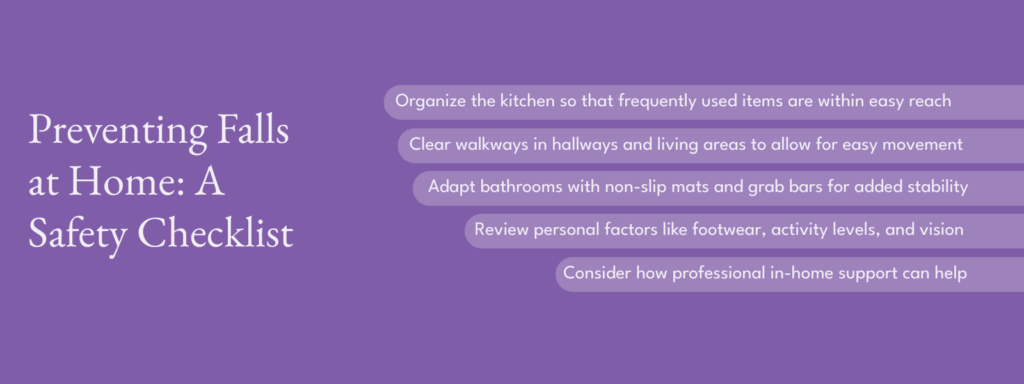
- Clear walkways in hallways and living areas to ensure easy movement.
- Adapt bathrooms with non-slip mats and grab bars for added stability.
- Organize the kitchen so that frequently used items are within easy reach.
- Review personal factors like footwear, activity levels, and vision with your loved one.
- Consider how professional in-home support can assist with recovery and mobility.
A proactive approach to home safety helps maintain quality of life. By using this checklist, you can create a more secure environment for your loved one. When a physician recommends additional support, services like home health care can become a valuable part of your family’s care journey.
For families in Dayton and the surrounding communities, the compassionate team at Bethany Village Home Health Care is ready to help develop a care plan tailored to your loved one’s needs. Contact us today to learn how our skilled nurses and therapists can provide support at home for you and your family.