

When a loved one needs support at home, it can be difficult to know what type of care makes the most sense. Some families are navigating recovery after surgery or a hospital stay. Others are managing a chronic condition that requires steady oversight. You have plenty of care options, so how do you make the right choice for your loved one?
Short-term home health care is designed to help someone recover after a specific medical event, while ongoing home health care provides consistent support for managing long-term health needs. Each serves a different purpose, and the right choice depends on your loved one’s health goals, physician recommendations, and expected timeline of care.
Key Takeaways
- Short-term home health care supports recovery after a specific medical event, such as surgery or hospitalization.
- Ongoing home health care provides consistent oversight for managing chronic or progressive health conditions.
- Short-term services may include wound care, medication management, and physical, occupational, or speech therapy.
- Ongoing services often involve regular nurse visits, chronic disease monitoring, and family education.
- The right option depends on the primary goal of care, the health condition, and whether there is a defined timeline.
A Look at Short-Term Home Health Care
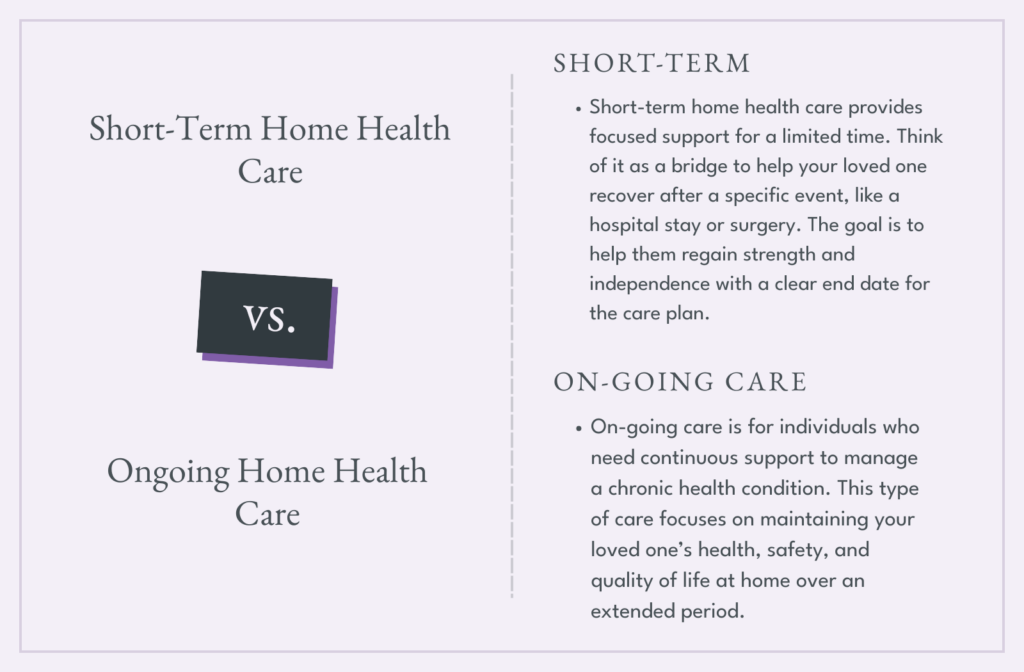
Short-term home health care provides focused support during recovery. Typically recommended after a hospital stay, surgery, fall, or illness, this helps your loved one regain strength, mobility, and independence within a defined period of time.
Who Benefits From Short-Term Care
Short-term care is often appropriate when there is a clear recovery plan. A physician may recommend this type of care after joint replacement surgery, cardiac procedures, or a serious infection. It’s also common when someone needs rehabilitation services at home rather than in an outpatient setting.
Common Short-Term Services
Short-term home health services are centered on improvement and recovery. It can include support with wound care, medication management, monitoring vital signs, along with physical, occupational, or speech therapy.
All About On-Going Home Health Care
Ongoing home health care is structured differently. Rather than focusing on recovery from a single event, it supports long-term health management. This approach helps older adults stay safe and stable at home when ongoing medical oversight is needed.
Who Benefits From Ongoing Care?
Ongoing care is often recommended for older adults managing chronic health conditions. This may include heart disease, diabetes, respiratory conditions, or progressive neurological diagnoses. Some individuals require regular monitoring to prevent complications or hospital readmissions, while others benefit from continued therapy.
Common On-Going Services
Services within an ongoing care plan emphasize consistency. A skilled nurse may visit regularly to monitor symptoms, adjust care plans in coordination with the physician, and provide education to family members. Medication management and chronic disease monitoring are common components as well.
How to Know What Your Loved One Needs
Choosing between short-term and ongoing home health care starts with understanding the primary goal of care. If needed, you can also collaborate with your loved one’s primary physician to determine what support is appropriate.
Consider the Main Goal of Care
Ask whether the objective is recovery or long-term management. If your loved one is expected to regain independence after a specific event, short-term care may be the right fit. If the focus is on maintaining stability and preventing decline, ongoing care may provide the steady support needed.
Look at Their Health Condition
Temporary conditions often require short-term intervention. For example, healing from surgery or regaining strength after a fall typically involves a defined treatment window. Chronic or progressive conditions, however, may require ongoing oversight and routine monitoring.
Think About the Timeline
A care plan with a clear start and end date usually indicates short-term services. When there is no defined endpoint, ongoing care may be more suitable. Here, talking with a healthcare professional makes a significant difference because they can use their experience to guide your family through this decision.
The Value of Professional Home Health Support
Whether care lasts a few weeks or continues for a longer period, professional home health services offer meaningful support. Skilled nurses and therapists collaborate with physicians to create a care plan tailored to your loved one’s unique needs. This coordination promotes safety, comfort, and continuity of care.
Meanwhile, receiving services at home also allows your loved one to remain in familiar surroundings. Many people feel more at ease in their own space, which can support both physical and emotional well-being. With the right level of care in place, families often experience greater peace of mind.
Find the Right Path for Care at Home
By learning the difference between your options, you’re already taking an incredible first step. One focuses on recovery after a specific medical event, while the other provides steady support for long-term health management. Both approaches are designed to help your loved one remain safe and supported at home.Bethany Village Home Health Care offers both short- and long-term care options, including skilled nursing and physical, occupational, & speech therapy. Contact us today to learn more about how Bethany Village Home Health Care may meet your family’s needs